By Daniel Kodjovi
Are you wondering why the weather suddenly changed and harmattan came back again in the month of February? I am very sure you were excited when you started feeling the cold because you have always soaked your bed as a result of the heat. Well, dont be disappointed because most of us have experienced such trauma recently. Don’t be too excited as well because the sudden change is nothing less than an impending danger as a result of climate change reactions. Calm down; don’t panic. We can all deal with this together. So, join me as I water your thirst on lessons to learn by mainstreaming the recent success of Morocco.
Nigeria’s latest GHG emissions estimates indicate around 2 tonnes of CO2 equivalent (tCO2e) per capita, per year and the INDC projects that by 2030, under a business-as-usual (BAU) scenario, total emissions will grow by 114% to 900 million tCO2e (approximately 3.4 tCO2e per capita).[1] This outrageous estimation remains alarming and is sufficient to prove that the rate at which Nigeria consumes and engages in carbon emission is drastically high. The reverberating emission of carbon into the environment poses a threat on both the environment and serves as a detriment to the survival of human thereby creating a climatic condition that spurs an unending problem causing defect in the human health and structure.In 2021, Nigeria’s vulnerability to climate disasters and its adaptive capacities ranked 161 out of 182 countries assessed by the Notre Dame Global Adaptation Initiative (ND-GAIN).
Furthermore, Climate change is widely considered to disproportionately affect Africa, with the rate of temperature rise and its attendant impacts, such as desertification, coastal erosion, loss of biodiversity and saltwater intrusion, increasing faster than on average throughout the world. The rationale behind the foregoing is as a result of the consistent utilisation of greenhouse fossil fuels. Fossil fuels are formed from the decomposition of buried carbon-based organisms that died millions of years ago. They create carbon-rich deposits that are extracted and burned for energy. They are non-renewable and currently supply around 80% of the world’s energy. They are also used to make plastic, steel and a huge range of products. There are three types of fossil fuel – coal, oil, and gas. Fossil fuel contributes immensely to environmental pollution, and as a matter of fact, big corporate entities are trying everything possible to undermine the plans of the government for achieving Net-Zero target.
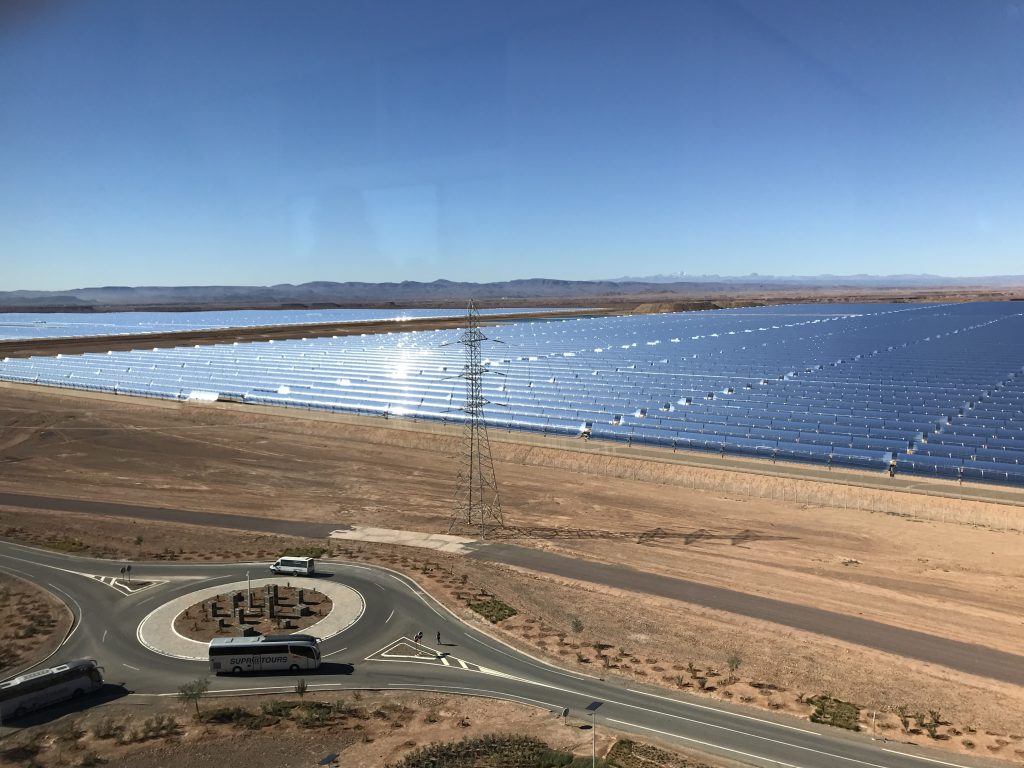
Apparently, Nigeria’s counterpart – Morocco – has gone faster than the speed of flash in achieving the net-zero target with the swift change in generating renenergy other than burning fossil fuels. The paradigm shift was formulated after the consideration of the resultant implications of the greenhouse gas emissions into the environment. Thanks to the authorities in Morocco, the system they’ve adopted has helped them control the effect of global warming on their nation. The transition in Morocco has not only helped their nature but has contributed substantially to reducing the wide spread of climatic abnormalities in Africa. To fulfil this energy transition, the liberalization of the renewable energy market was adopted and financial mechanisms have been created to stimulate private sector involvement and to facilitate the implementation of the public–private partnership. Essentially, the government has created a leeway to encourage private and public investments in clean energy rather than industries that consistently burn fossil fuels, thereby emitting dozens of greenhouse gas into the atmosphere.
Secondly, Morocco joined the African Green Hydrogen Allaimce in order to facilitate the establishment of hydrogen infrastructures. One of the benefits of each member state gets is the unfettered access to the incentives jointly contributed by the association. Green hydrogen, produced with renewable power, has the potential to rapidly decarbonise hard-to-abate industrial sectors such as steel, chemicals, fertilisers, shipping and trucking. Many African countries are well-suited to develop green hydrogen, with strong solar and wind energy potential and large tranches of non-arable land. This could provide Africans with new access to clean energy sources, job opportunities in the zero-emission economy, and public health benefits such as cleaner air, domestic wealth creation, and export revenues.
Lastly, In response to the global climate emergency and its consequences, Morocco has made decarbonising its energy sector a national priority. Global agreements such as the Kyoto Protocol, Paris Agreement and the Glasgow Pact have so far not deterred the increase in global warming that leads to increasing surface temperature. The temperatures continue to increase as emissions of GHGs, principally carbon dioxide (CO2), continue to increase. Carbon dioxide has exceeded a record high stage, posing a deluge of climate-induced challenges and fast-tracking global warming.[1]
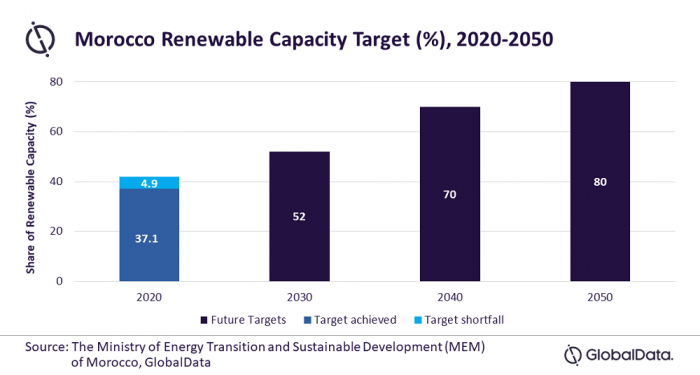
Conclusively, to accommodate a rise in green hydrogen production and support other net-zero goals, Morocco aims to increase renewables’ share of power generation to 52 percent by 2030, 70 percent by 2040, and 80 percent by 2050.
The Nigerian government can try to adopt some of the strategy to make the net-zero target a reality in Nigeria, failure of which will make things werserrrr (A Nigerian slang tantamount to worser). While Morocco is at the forefront of every African Nation in the production of green hydrogen to abate global warning, Nigeria can still compete with its counterparts by taking wevey reasonable step to curb carbon emission.
[1] This Day, ‘Nigeria’s 22030 Net-zero projection’. <https://www.thisdaylive.com/index.php/2021/11/18/nigerias-2060-net-zero-projection/> accessed 16 of February, 2023
[2] Chapungu, L.; Nhamo, G.; Chikodzi, D.; Maoela, M.A. BRICS and the Race to Net-Zero Emissions by 2050: Is COVID-19 a Barrier or an Opportunity? J. Open Innov. Technol. Mark. Complex. 2022, 8, 172. <https://www.mdpi.com/2199-8531/8/4/172#B7-JOItmC-08-00172>

 Law code hub