By Daniel Kodjovi
INTRODUCTION
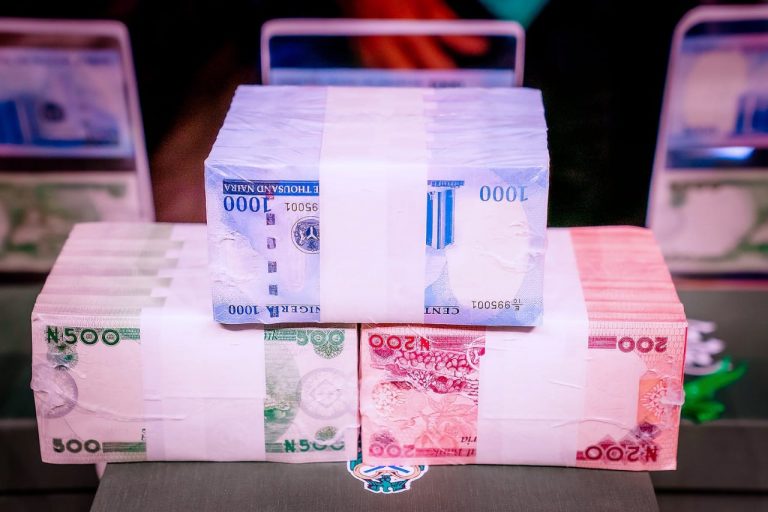
On the 23rd of November, 2022, President Muhammadu Buhari launched the redesign of the Naira note following the recommendation by the Central Bank of Nigeria. There was a rumour spreading every nooks and crannies that the rationale behind the adoption of the swift change of the Naira note is because the election is fast approaching and the government intended to curb every form of corruption & Bribery on the part of the candidates aspiring to hold political offices. On a contrary note, some persons asserted that the reason for the change of the legal tender is to regulate the outflow of money in the country, which they presume will abate inflation. However, this writer is not a sorcerer who could deduce the rationale behind the change of the Naira note. As a matter of fact, the crux of this writeup is to examine the impact of the change of the Naira note on the Nigerian economic sector and by extension, the apparent effect on the lives of Nigerians. Essentially, has it done more good than harm or is it the converse situation?
AN EXAMINATION OF RELEVANT STATORY PROVISIONS WITH RESPECT TO THE POWER TO CHANGE THE NAIRA NOTE
The primary legislation that upholds or guarantees the powers of the CBN is the Central Bank of Nigeria Act. The Act mandates the CBN to formulate and implement monetary policy with the aim of establishing a healthy environment for monetary stability. Moving further, Section 17 of the CBN Act provides that the Bank (which is the Central Bank of Nigeria) shall have the exclusive right to issue currency notes and coins restraining the Federal or state government from doing such. Section 18, 19, and 20 of the CBN Act are the provisions where the CBN in its utmost capacity, exercised their powers by discharging their duties to redesign the Naira note if need be for the betterment of the society.
THE CONTRAVERSIES IN RELATION TO THE DECISION OF THE CBN GOVERNOR
A few weeks ago, the CBN governor ordered that the old Naira notes should be deposited at the banks in order to facilitate the circulation of the new Naira notes and expunge the utilisation of the old Naira notes as a legal tender for the purchase of goods and rendering of services. The order of the CBN governor propelled a public outcry leading to the congestion of people at bank areas. Several legal luminaries opined that the disposition of the CBN Governor was contrary to the enabling law, which is the provision of the CBN Act.
Consequently, the opinion of these legal juggernauts have proven to be true as the provision of the CBN Act allows the Central Bank of Nigeria to still receive money deposited even when the time slated for deadline has elapsed contrary to the order of the CBN Governor. For proper clarity, Section 20 (3) of the CBN Act provides that: ….subject to Section 22, shall be redeemed by the bank upon demand. It has turned out to be that the provision might have been misinterpreted by the CBN governor. Fortunately, few days later, the CBN governor disseminated a statement of his, stating that the banks will still accept the old Naira notes as deposits. The afterwards statement of the CBN Governor is an acknowledgement of the relevant provisions of the CBN Act.
IMPACT OF THE CHANGE OF THE NAIRA NOTE ON THE SOCIO-ECONOMIC WELFARE OF NIGERIANS
The recent decision of the president alongside the CBN has aggravated emotional distress, psychological debasement, and financial constraints. Apparently, there has been inflation in every sector contrary to the aim of the government and CBN before adopting this policy reform. Financial institutions are being raded at the moment in several areas as a result of the approach in collecting funds to survive – both the rich and poor are seeking alternative ways to get the new Naira notes. In the light of current realities, the new legal tender has done more harm than good by upholding economic instability, with the exorbitant price attached to fuels, utensils, and money, amongst many others. Sadly speaking, people now use money to buy money.
It is no news that one of the aims of the government and CBN in alignment with the general purview with respect to the redesign of the legal tender is to compliment a cashless policy. The question that begs for an answer is: Is the cashless policy practical in Nigeria? Your answer is as good as mine! Without turning a blind eye at the question distilled, the appropriate answer is NO. The reason for this answer is premised on the ground that Nigeria is a developing country. As such, there are more rural areas than urban areas. Despite the fact that technology has revolutionised the ways at which we do things, tech ology has not permeated through every location in Nigeria. This goes without saying that the cashless policy will be feasible in a developed country that has only fewer rural areas.
CONCLUSION
The introduction of the redesign of the legal tender is a laudable initiative to help curb corruption; improve cashless policy, and regulate the flow of money. However, the practicability of this initiative has turned out to birth chaos ranging from inflation to public unrest as a result of financial constraints. If the government doesn’t do anything to resolve this issue, the standard of living in Nigeria will be absurdly high and this writer will have no option but to start a POS business.

 Law code hub